
Table of Contents
If you are trying to upgrade your kitchen prep game, you have probably found yourself staring at two very similar-looking machines and asking the ultimate question: food processor vs blender—which one do I actually need to buy?
To a beginner, they look like they do the exact same job. Both have a motorized base, a clear plastic or glass pitcher, and sharp spinning blades at the bottom. But if you try to make a green smoothie in a food processor, or try to chop dry onions in a blender, you will end up with a frustrating, ruined mess.
As kitchen appliance testers here at HomeCritiQue, we have burned out plenty of motors testing these machines. Here is the definitive guide to the food processor vs blender debate, exactly how their blades work, and which one deserves a spot on your countertop.
The Core Difference: Liquid vs. Solid
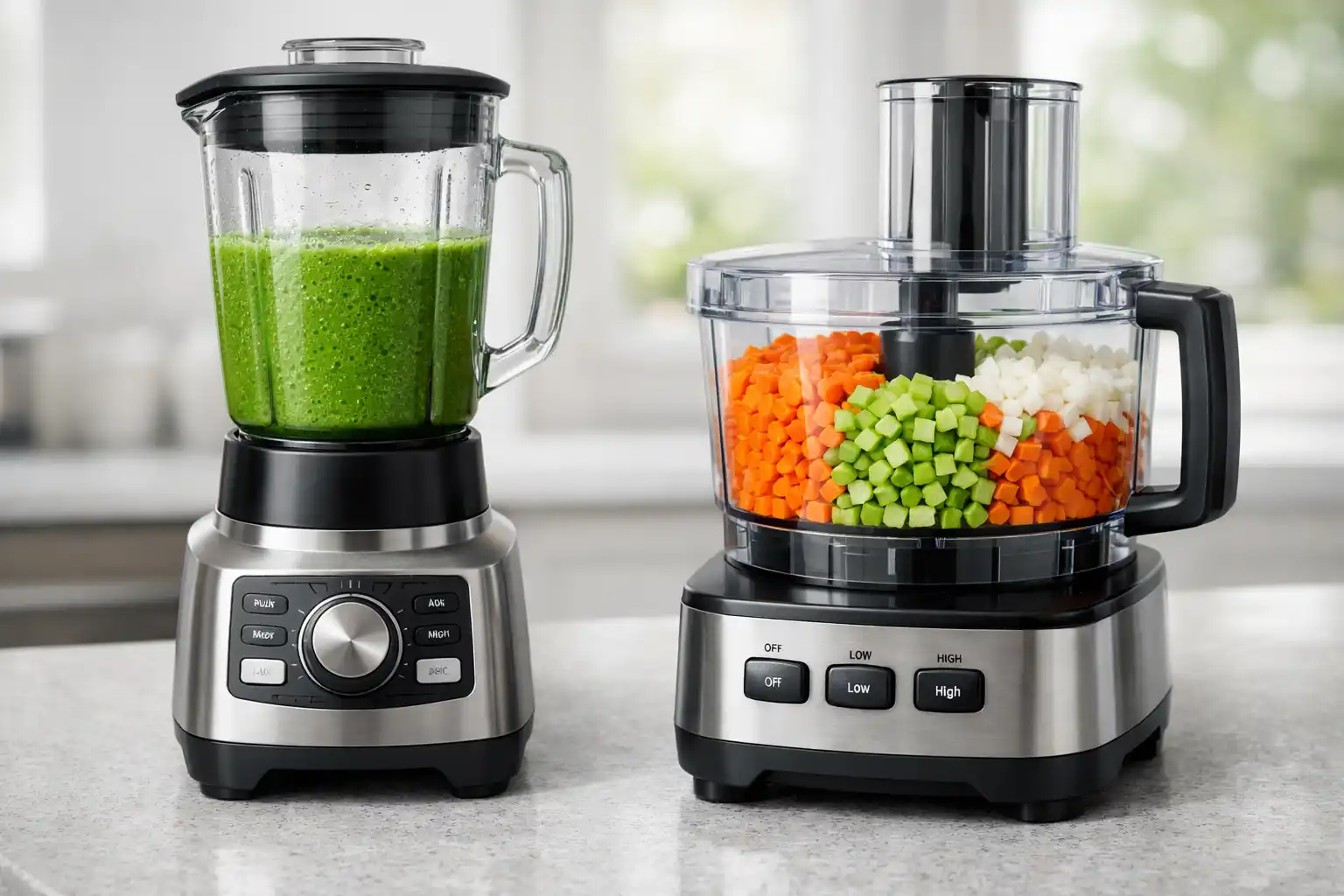
The easiest way to settle the food processor vs blender debate is to look at the shape of the pitcher and the design of the blades.
The Blender (The Liquid Master): A blender features a tall, narrow pitcher. The blades at the bottom are slightly angled. This creates a powerful “vortex” (a liquid tornado). As the blades spin, they pull liquids and soft ingredients down into the center, pulverizing them into a perfectly smooth liquid. Crucially, a blender requires liquid to function properly. If there is no liquid, the blades will just spin in empty air while the solid food gets stuck on the walls.
The Food Processor (The Solid Chopper): A food processor features a wide, flat bowl. The blades are completely flat and sit very close to the bottom. Instead of creating a liquid vortex, a food processor is designed to slice, shred, and chop solid, dry foods. It does not need any liquid to operate. In fact, if you put too much liquid in a food processor, it will leak right out of the center shaft.
(Curious about the exact physics of how these blades cut through different cell walls? Check out this great culinary breakdown on how appliance blades affect food texture from the chefs at Serious Eats).
What is a Blender Best For?
If your goal is to drink your meal or create silky-smooth purees, the blender is your tool.
Best uses for a blender:
- Smoothies and protein shakes.
- Crushing ice for frozen cocktails (like margaritas).
- Pureeing hot soups (like butternut squash soup).
- Blending liquid batters (like pancake or crepe batter).
(Are you looking to make the perfect morning smoothie? Don’t buy a cheap model that will burn out in a month. Check out our massive, ranked guide to the 5 Best Blenders for Smoothies & Meal Prep!)
What is a Food Processor Best For?
If your goal is to save 20 minutes of chopping vegetables with a chef’s knife every night, the food processor is your best friend. It acts as a mechanical sous-chef.
Best uses for a food processor:
- Dicing dry vegetables (onions, carrots, celery).
- Shredding blocks of cheese or slicing pepperoni.
- Grinding nuts into homemade peanut butter.
- Mixing thick doughs (like pie crusts or pizza dough).
(If you don’t have the space for a massive 12-cup machine but still hate chopping onions by hand, read our deep-dive review of the space-saving Cuisinart Mini Food Processor).
Food Processor vs Blender: Can You Use Them Interchangeably?
This is the most common question we get: Can I just buy one and use it for everything?
The short answer is no. If you try to make salsa in a blender, the vortex will turn the bottom half into watery tomato juice while the top half remains giant chunks. If you try to make a smoothie in a food processor, the wide bowl won’t create a vortex, and you will be left chewing on large pieces of kale and unblended frozen fruit.
If you are on a strict budget and absolutely must choose just one, buy a high-quality blender first. It is much easier to chop onions by hand than it is to puree a smoothie by hand!
Frequently Asked Questions
Can a food processor crush ice?
While some high-end food processors have thick enough blades to chip away at ice, it is highly discouraged. The flat blades are meant for slicing, not crushing. Putting solid ice into a food processor can easily dull or snap the blades and crack the plastic bowl. Always use a blender for ice.
Can I puree baby food in a food processor?
Yes, but a blender will give you a much smoother, silkier texture. A food processor will leave the puree slightly chunky, which is fine for older toddlers, but a blender is better for early-stage baby food.
Which appliance is easier to clean?
Food processors are notoriously annoying to clean because they have multiple parts (the bowl, the lid, the pusher tube, and the removable blade). Blenders are much easier. In fact, most blenders can clean themselves! Just add warm water and a drop of dish soap, and run the blender on high for 30 seconds. (Speaking of easy appliance maintenance, don’t miss our viral guide on how to clean an air fryer safely!)
More Kitchen Appliance Showdowns:
Are you outfitting your kitchen and need to make more countertop decisions? Check out our other popular head-to-head debate:
The Final Verdict
When settling the food processor vs blender debate, the right choice simply comes down to what you cook the most.
If you make daily protein shakes, frozen drinks, and creamy soups, buy a Blender. If you bake pies, make homemade salsa, and hate chopping vegetables for weeknight dinners, buy a Food Processor.
If you have the cabinet space, the ultimate kitchen setup includes both!